
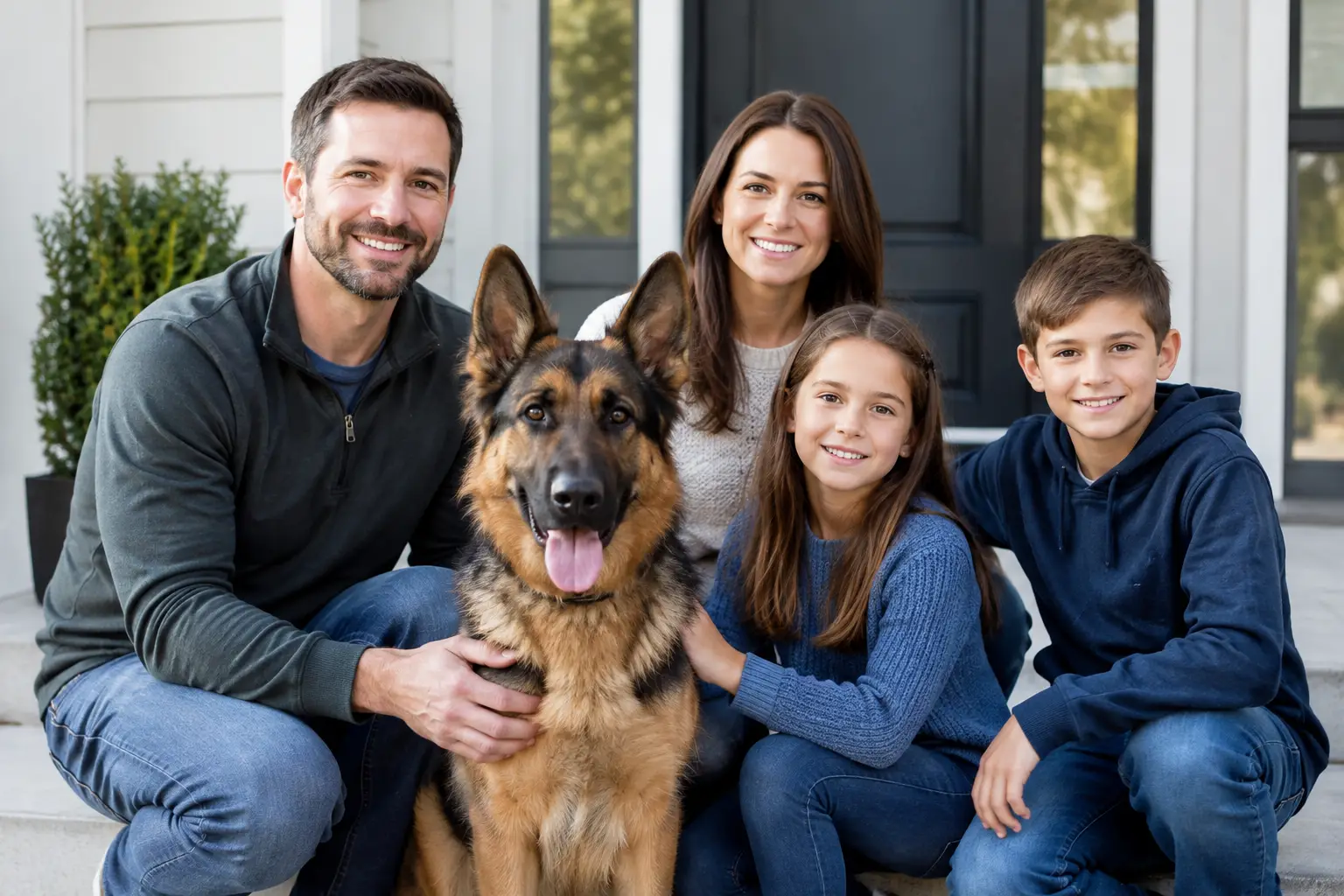
A serious protection dog is not selected by appearance, breed reputation, or a single dramatic training video. This working dog buyer guide is for buyers who need a stable, capable dog that can live under control in a family home while delivering real deterrence and protection when required. The standard is not simply drive. The standard is clear obedience, sound nerves, social stability, health, and proven working ability.
A properly selected working dog becomes part of your daily environment. It must be trustworthy around the people you authorize, neutral around ordinary distractions, responsive under pressure, and decisive when a genuine threat develops. That combination is rare. It requires disciplined breeding, correct development, and training that holds up outside a kennel or training field.
Start With the Job, Not the Breed
Buyers often begin by asking which breed is best. The more useful question is: what exactly must this dog do in your life?
An executive who travels frequently may need a compact, highly responsive dog with strong handler focus and the ability to transition confidently between residences, vehicles, and public settings. An estate owner may prioritize presence, perimeter awareness, environmental confidence, and a dog that remains reliable around staff and invited guests. A family with young children may need a lower-key dog with exceptional clarity, strong obedience, and the ability to settle calmly indoors.
The dog’s job also determines whether a trained adult or a puppy is the right purchase. A puppy gives an experienced owner the opportunity to shape a dog from an early age, but it does not provide immediate protection. Even a promising puppy is still a developing prospect. Genetics matter, yet maturity, training, health, and nerve strength must still be proven over time.
A fully trained adult dog offers a different value. The buyer can evaluate the actual dog, not a prediction. You can see obedience, social behavior, environmental confidence, bite work, recovery after stress, and the dog’s relationship with its handler. For clients who require an immediate security capability, a finished or advanced trained dog is usually the more practical choice.
Working Dog Buyer Guide: Temperament Comes First
The best protection dogs are not constantly agitated, suspicious, or difficult to contain. A dog that reacts to every person, sound, or movement creates risk rather than security. High-level protection work depends on discrimination: the dog must recognize normal life, remain controllable, and engage only when commanded or when a legitimate threat demands action.
Look for a dog that is confident without being frantic. It should move through unfamiliar places without avoidance, recover quickly from sudden noise or pressure, and stay engaged with its handler. A strong working dog does not need to advertise itself every minute. Its presence, posture, obedience, and command response should make the point.
Ask to see the dog in more than one setting. A kennel demonstration can show technical obedience and protection mechanics, but real evaluation should include neutral social contact, loading in and out of a vehicle, exposure to unusual surfaces and noises, and calm behavior around the household. The dog should be able to shift from work to control without conflict.
For family buyers, stability around children is non-negotiable. That does not mean children should handle, tease, or test a protection dog. It means the dog must be properly introduced, supervised, and managed within a clear family structure. The adults remain responsible for commands, routines, and boundaries.
Breed Should Match Your Environment
German Shepherds remain a leading choice for family protection because they combine presence, trainability, versatility, and a strong ability to bond with their household. The correct individual can be serious in protection work and composed in the home. However, quality varies dramatically. Buyers should focus on the dog’s nerves, structure, health testing, and working pedigree rather than assuming every German Shepherd has the same ability.
Belgian Malinois are fast, athletic, intense, and highly responsive. In the right home, they are exceptional personal protection dogs. They are not the automatic answer for every buyer. Their drive and energy demand a handler who will maintain structure, exercise, and regular engagement. A Malinois chosen only for its reputation can overwhelm an unprepared household.
Doberman Pinschers offer a clean, elegant profile with natural deterrent value and close family attachment. Rottweilers bring power, confidence, and a commanding presence when bred and trained correctly. East-European Shepherds can offer size, strong nerves, and serious guardian character. Each breed has strengths, but no breed label replaces individual evaluation.
The right dog is the one whose temperament, physical ability, and training level fit your household. A powerful dog that does not suit your lifestyle is not a premium purchase. It is a management problem.
Verify Health, Pedigree, and Physical Soundness
Protection training places physical and mental demands on a dog. Buyers should expect transparent information about hips, elbows, spinal health where relevant, genetic screening, vaccination records, and veterinary history. A dog can show impressive obedience and still be a poor long-term investment if its structure or health is compromised.
Pedigree matters because it provides context. Strong working bloodlines can indicate generations selected for nerve, drive, trainability, and athleticism. But pedigree alone is not a guarantee. The dog in front of you must demonstrate the qualities you are purchasing.
Examine how the dog moves. It should be balanced, coordinated, and physically comfortable. Watch for hesitation when jumping into a vehicle, stiffness after work, poor rear movement, or signs that the dog lacks endurance. A sound dog is not just better equipped to perform. It is more likely to remain comfortable and functional as a long-term companion.
Understand What Training Should Include
A protection dog should have obedience that functions in normal life, not only in a controlled training session. The dog should reliably respond to commands around distractions, remain in position when directed, walk under control, load and unload cleanly, and release engagement immediately on command.
Protection training should be clear, controlled, and purposeful. The dog must understand when to engage and when to stop. A dog that bites with power but cannot be recalled, outed, or redirected is not a finished protection dog. Control is the difference between capability and liability.
Before purchase, ask direct questions. Has the dog worked in public environments? Does it remain neutral when strangers approach normally? What command system does it know? How is the dog transferred to a new owner? What follow-up training is available? The seller should answer with specifics and demonstrate the dog rather than relying on broad claims.
A professional handover is part of the purchase, not an optional extra. The dog must learn its new family, residence, routines, and handler expectations. The buyer must learn proper command delivery, leash handling, reward structure, corrections when appropriate, and safe management around guests. Even an elite dog requires consistency after placement.
Plan for Ownership Beyond Delivery
A trained protection dog is a serious responsibility. Daily exercise, routine obedience, correct feeding, veterinary care, and controlled social exposure protect the training investment. The dog does not need chaos or constant testing. It needs a calm, accountable handler and a predictable structure.
Your home also needs rules. Decide who handles the dog, how visitors are introduced, where the dog rests, and how service personnel are managed. Never allow casual guests to interact with the dog without guidance. A well-trained dog deserves clear expectations from the people around it.
Professional support matters after the dog arrives. The best providers remain available to help the new owner maintain standards, answer handling questions, and address changes in household routine. At EurosportK9, the objective is not simply to place a dog. It is to place the right dog with the right client and establish the control needed for long-term performance.
The strongest buying decision is usually the least emotional one. Choose the dog that has been proven in the work you need, has the nerve and health to sustain that work, and fits the life your family actually lives. When those elements are in place, protection becomes a disciplined daily reality rather than a promise made at the point of sale.
continue reading

