
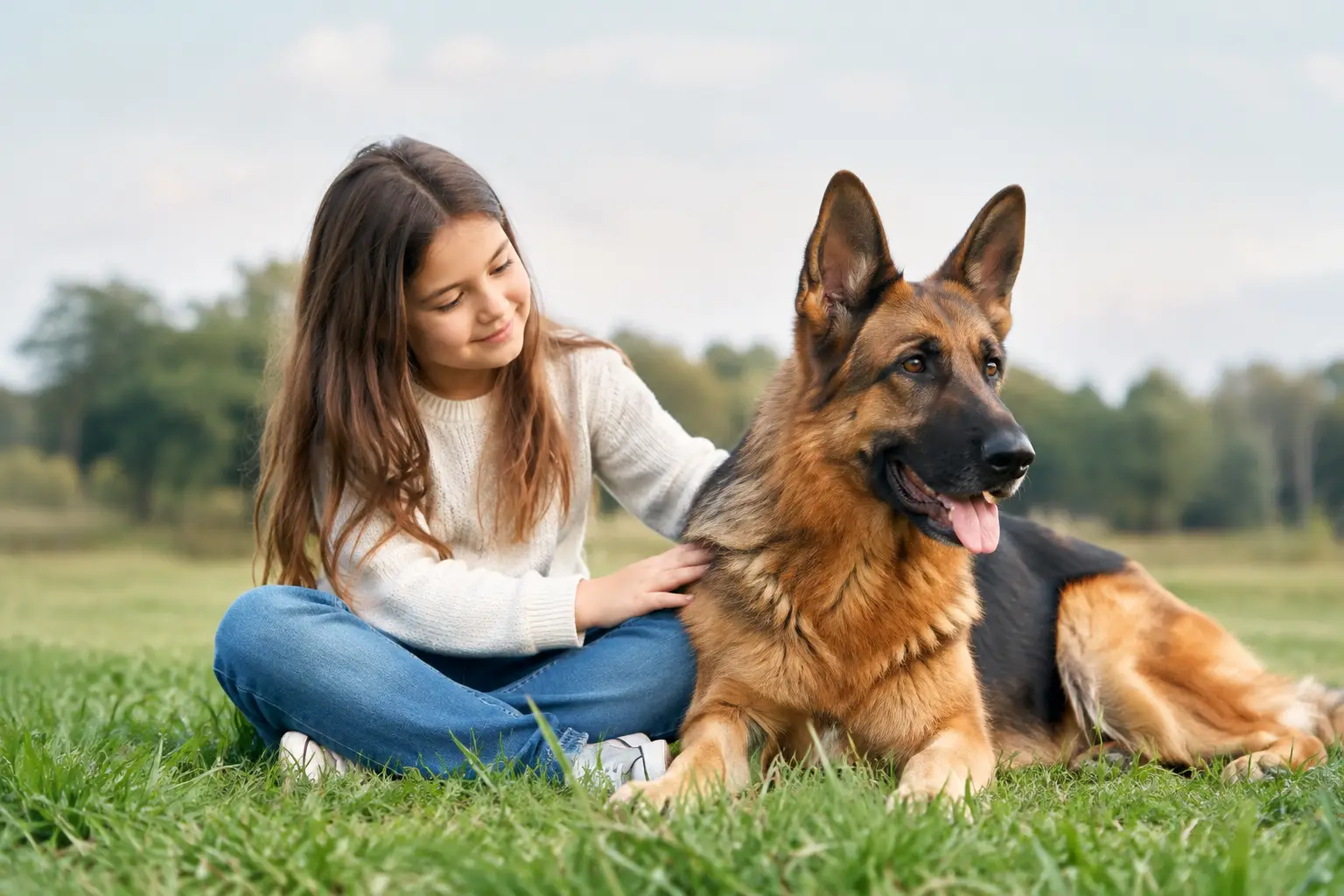
A guardian dog does not need children to be fearless. It needs them to be predictable. To prepare children for guardian dogs, begin before the dog enters the home by establishing calm routines, firm boundaries, and adult-led control. A properly selected, highly trained dog can be deeply devoted to its family, but family compatibility is built through management and respect, not assumptions.
A serious guardian dog recognizes the difference between normal household activity and a situation that requires attention. Children running, shouting, dropping toys, welcoming friends, and moving through doorways are normal family events. Your job is to teach children how to behave around the dog so those events remain clear, safe, and uneventful.
Prepare Children for Guardian Dogs Before Arrival
The first conversation should be direct: this is not a stuffed animal, a toy, or a dog to test. It is a trained animal with a job, strong instincts, and a need for consistent handling. Children do not need to be afraid of that fact. They need to understand it.
Explain that the adults are responsible for the dog’s care, training, feeding decisions, visitors, and security routines. A child can participate in appropriate ways, such as calmly greeting the dog, helping an adult with simple routines, or practicing respectful handling. But the child is never the dog’s trainer, disciplinarian, or protector.
Set the household rules before the dog arrives. That preparation prevents the common mistake of correcting a child only after an unsafe interaction has already occurred. Young children need short, repeatable language. Older children and teenagers need the reason behind each rule, especially if they are used to casual behavior around pet dogs.
The four nonnegotiable rules are simple:
- Do not disturb the dog while eating, sleeping, resting in its crate, or holding a toy or chew.
- Do not climb on, hug tightly, pull, chase, corner, or startle the dog.
- Do not open exterior doors, gates, kennel doors, or vehicle doors without an adult.
- Tell an adult immediately if the dog seems uncomfortable, alert, injured, or unusually focused on something.
These rules apply even to the most stable family protection dog. Strong temperament does not mean a dog should tolerate poor behavior. In fact, stable dogs deserve clear boundaries because they are expected to make sound decisions under pressure.
Teach Calm, Respectful Interaction
Children often communicate excitement physically. They rush toward a dog, lean over its head, wave objects, or put their faces close to its face. Those habits must change around a guardian dog. Teach children to approach at a normal walking pace, keep their hands visible, and allow the dog to choose a calm greeting.
The first interactions should be brief and structured. An adult controls the dog on leash, asks for a known obedience position, and invites the child to approach only when the dog is calm. A quiet stroke on the shoulder or chest is generally more appropriate than reaching over the dog’s head. Then the interaction ends while everyone is successful.
Avoid forcing affection. Some guardian breeds are demonstrative with family members, while others show attachment through proximity, attention, and quiet loyalty. A child should not interpret a dog walking away as rejection. The correct response is to let the dog have space.
Teach children to read the most obvious signs that a dog needs distance: turning away, moving away, becoming still, repeated lip licking, yawning when not tired, tucked posture, or a fixed stare. These signals do not mean the dog is bad. They mean the adults should intervene early and give the dog room. Early recognition is how good homes avoid preventable problems.
Adults Must Own Control and Corrections
A trained protection dog should have advanced obedience, but obedience is only as reliable as the structure around it. Adults must control access to food, high-value toys, entry points, guests, and the dog’s resting areas. This is particularly critical during the first weeks, when the dog is learning the rhythm, voices, and rules of its new environment.
Children should never correct a guardian dog physically or confront it over an item. They should not grab a collar, pull a dog from furniture, or attempt to take away food or toys. If a child sees behavior that concerns them, the correct response is to create distance and get an adult.
Likewise, do not allow children to give random commands merely because the dog knows them. A child can be taught a small set of approved, low-pressure cues under adult supervision, but the adults should retain responsibility for all meaningful control. This protects the child, preserves clarity for the dog, and keeps obedience precise.
Professional training also needs to transfer to the family. The dog may arrive with exceptional obedience and a proven protection foundation, yet every household has different movement patterns, voices, rules, and distractions. Follow the handler instruction provided with the dog. Consistency at home is what turns professional training into reliable daily behavior.
Manage Play, Visitors, and High-Energy Moments
The most difficult situations are rarely quiet evenings. They are birthday parties, children returning from school, rough play in the yard, delivery arrivals, repair crews, and unfamiliar friends at the door. A guardian dog may correctly become more attentive when energy rises. That is why management matters.
Do not expect a family protection dog to supervise a crowded playdate from the middle of the room. Put the dog in a secure, familiar area or have a capable adult handle it separately. This is not a punishment. It is disciplined management that prevents the dog from having to interpret loud, unpredictable behavior by unfamiliar children.
Introduce regular visitors with a plan. The adult should greet the guest first, direct the dog into a controlled position, and make the introduction calm and brief. Children should understand that they do not bring friends inside before an adult has approved the entry. That single rule is essential in a security-minded home.
Outdoor play requires the same judgment. A dog can be present for calm family time, but games involving screaming, wrestling, water guns, scooters, or fast pursuit may call for separation. The right choice depends on the individual dog’s maturity, training, drive, and history, as well as the child’s age and behavior.
Give the Dog a Protected Place to Rest
Every guardian dog needs an area where no child follows it. This may be a crate, kennel run, gated room, or designated bed zone. The location should be secure, comfortable, and consistently treated as off-limits to children.
A protected rest space is not isolation. It gives the dog a clear place to decompress after training, exercise, visitors, or family activity. It also teaches children an important lesson: respect includes leaving another living being alone when it asks for space.
Do not use the dog’s area as a place to send children for punishment, and do not allow children to hide there during games. Clear separation keeps the space neutral and reliable.
Match the Dog to the Family You Actually Have
The right guardian dog for a household with toddlers may not be the right dog for a household with independent teenagers, frequent entertaining, or a remote estate. Breed matters, but individual temperament, training level, environmental confidence, social stability, and the family’s ability to maintain structure matter more.
A young puppy gives a family the opportunity to build routines from the beginning, but it also requires substantial time, experienced guidance, and careful developmental management. A fully trained adult dog offers established obedience and a clearer view of its working character. Neither option is automatically better. The right decision depends on your lifestyle, your children, and the level of responsibility you are prepared to maintain.
At EurosportK9, placement should be treated as a matching process, not a simple breed preference. A serious provider evaluates the dog’s temperament and capability alongside the household’s expectations. The goal is a dog that is confident without being unstable, protective without being indiscriminate, and obedient enough to live calmly within a family structure.
Build Trust Through Routine
Children and guardian dogs develop the strongest relationship through calm repetition. A child who walks past the dog without disturbing it, speaks in a normal voice, follows the same entry routine, and respects boundaries becomes familiar and predictable. That predictability builds trust.
Keep the dog’s exercise, feeding, rest, and training schedule consistent. Exercise should be meaningful, not chaotic. A properly conditioned dog needs physical work, obedience practice, and mental engagement, but endless overstimulation can create the very arousal families are trying to avoid indoors.
Supervision remains necessary, especially with younger children. Even an exceptional guardian dog is still a dog, and even a well-taught child can make a poor decision when excited, tired, or upset. Mature security starts with adults paying attention before a situation develops.
The standard for a family guardian dog is not that it tolerates everything. The standard is calm control: a dog that knows its family, respects the adults’ direction, and can settle confidently in the home. Give your children clear rules, give your dog structure and space, and let their relationship grow through disciplined daily routines.
continue reading
Related Posts

Estate guardian placement pairs a proven protection dog with your property, family, and routine for controlled, dependable security every day at home.
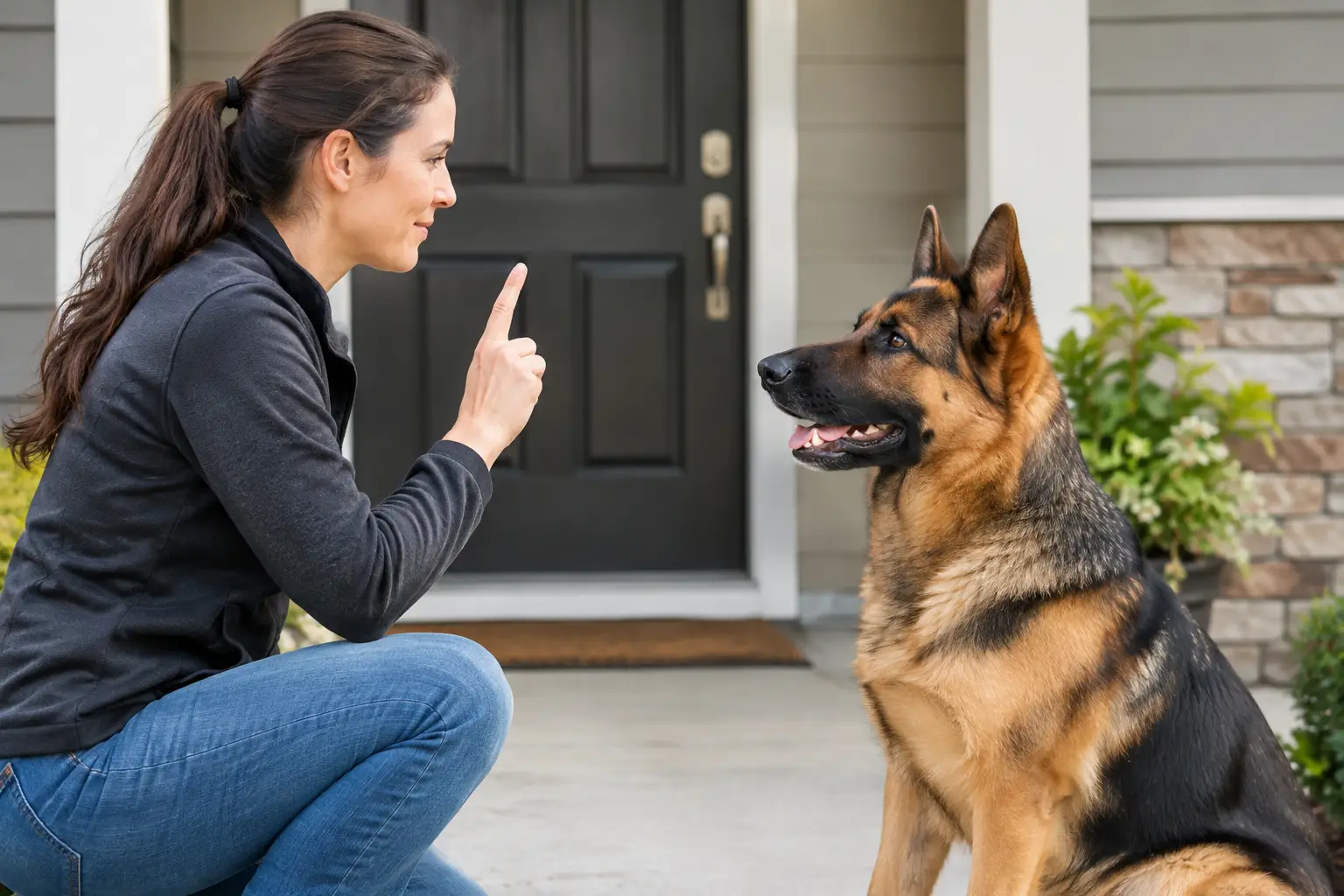
Home security dog commands create control before pressure starts. Learn the obedience, alert, recall, and release standards that protect families safely.
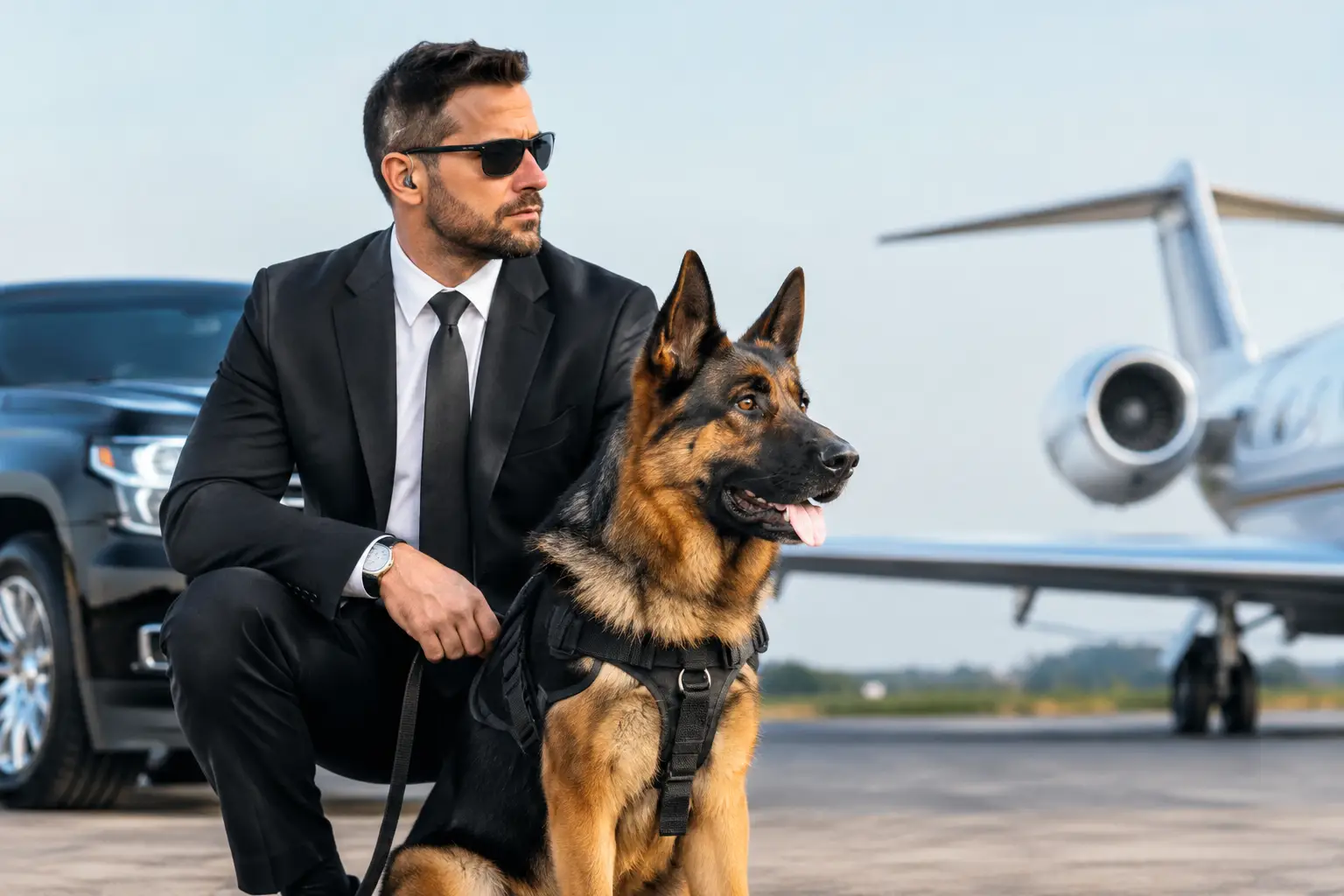
This executive security dog guide explains selection, training, handling, and placement standards for dependable personal and family protection at home.
