
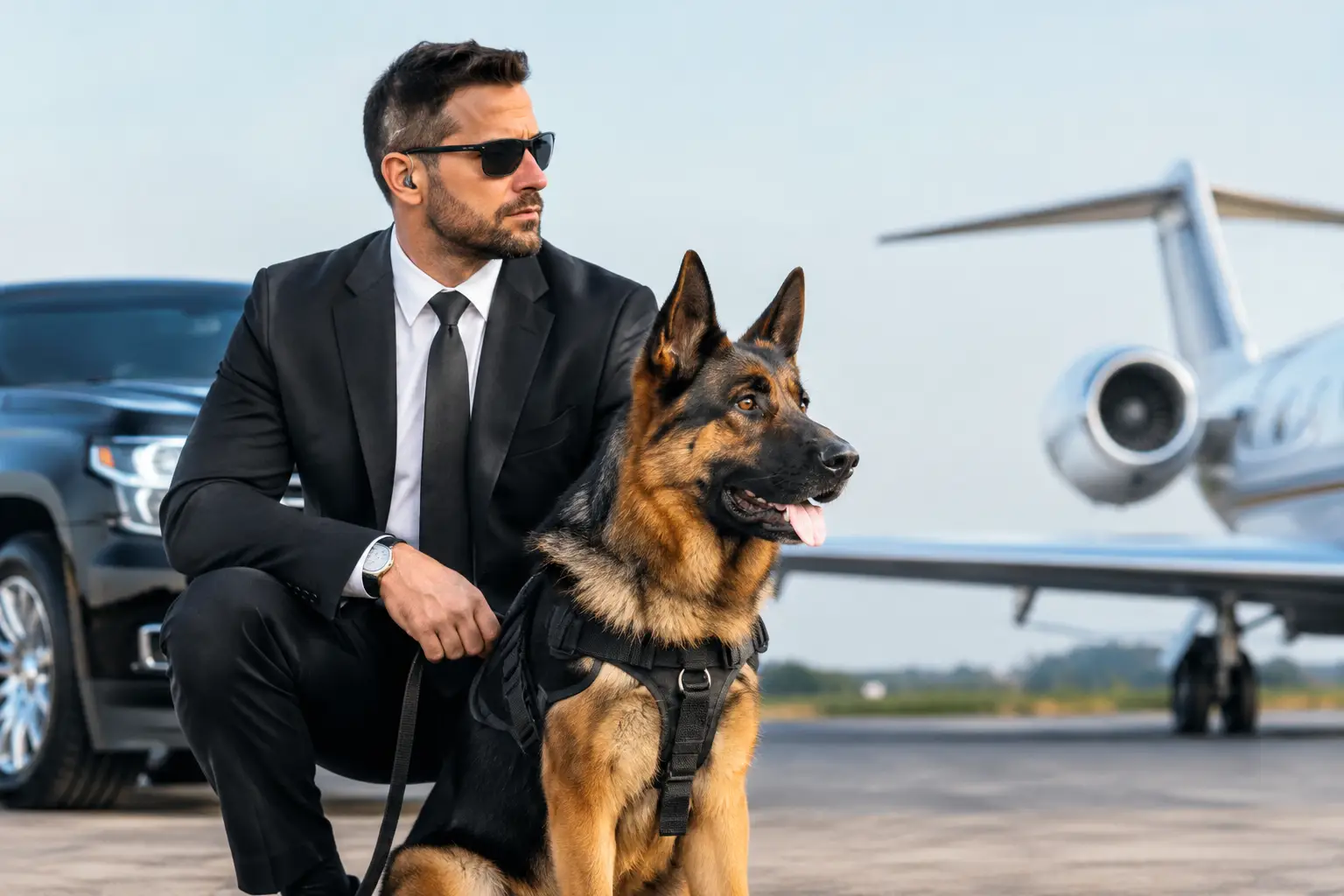
A serious protection dog should not create disorder in the home to provide security outside it. The right dog is calm around family, clear-headed around strangers, immediately responsive to direction, and capable of decisive action when a genuine threat appears. This executive security dog guide is for buyers who need that level of control, not a showpiece, an oversized pet, or an untrained deterrent.
For executives, estate owners, and security-conscious families, a professionally trained dog adds a living layer of protection that technology cannot duplicate. A dog detects presence, applies pressure through its presence and bark, and remains close to the people it is trained to protect. Those advantages only matter when the dog has the correct genetics, advanced training, stable nerves, and a placement program built around the client’s actual life.
What an Executive Security Dog Is Designed to Do
An executive security dog is not simply a guard dog kept behind a gate. It is a highly trained personal protection dog selected for civil stability, environmental confidence, obedience, and controlled protection work. The dog should live in the home, travel appropriately, settle on command, and distinguish normal activity from behavior that requires intervention.
The standard is functional versatility. A properly trained dog can be neutral when guests arrive under control, remain composed around children, walk through public environments without unnecessary reactivity, and engage only under trained criteria. Protection without obedience is a liability. Obedience without protective instinct is not executive security.
The dog’s deterrent value is also significant. A confident German Shepherd, Belgian Malinois, Doberman, Rottweiler, or other proven guardian breed often changes an intruder’s calculation before physical confrontation occurs. Still, the breed name alone does not guarantee performance. The individual dog, its bloodline, development, training, and handler relationship determine whether it is suitable for high-level private protection.
Start With Your Security Reality
The most common buying mistake is choosing a dog based on appearance or a dramatic protection demonstration. Start with the environment the dog will protect. A client who travels frequently, lives in a downtown residence, and hosts business guests needs a different dog from a family on a large rural property with a long driveway and multiple staff members.
Consider who will handle the dog daily, where it will rest, how often it will travel, and whether children, other pets, employees, or visitors are regularly present. A dog may have exceptional capability yet be the wrong placement if its drive level exceeds the household’s handling capacity. Conversely, a very social dog with modest defensive strength may be an excellent companion but insufficient for a client seeking credible personal security.
A legitimate provider should ask direct questions about your routine, home layout, security concerns, experience level, and expectations. That assessment is not a sales obstacle. It is how the provider matches a dog’s temperament and training to its future environment.
Protection Is Not Aggression
A stable protection dog is not indiscriminately aggressive. It does not lunge at every passerby, bark continuously at routine activity, or create conflict because it cannot recover from stimulation. Those behaviors signal poor nerve, poor training, insufficient management, or all three.
Controlled protection begins with neutrality. The dog must accept the handler’s leadership, remain composed under pressure, and understand when work starts and ends. A quality dog can move from alert to calm when instructed. This ability to disengage is as valuable as the ability to engage.
How to Evaluate a Trained Protection Dog
Before making a decision, evaluate the dog beyond a short bite-work demonstration. You are selecting a long-term security partner, not a performance clip. Ask to see obedience in distracting environments, calm behavior in a vehicle or kennel, and the dog’s response to unfamiliar people when no protection exercise is underway.
A complete evaluation should address four areas:
- Temperament: The dog should be confident, environmentally stable, social under proper handling, and quick to recover after stress.
- Obedience: The dog should demonstrate reliable heelwork, recall, place, down, sit, and control around distraction. Commands must work outside the training field.
- Protection training: The dog should show clear engagement, controlled grips, a dependable out command, and the ability to guard without frantic or uncontrolled behavior.
- Health and structure: Hips, elbows, spine, cardiovascular condition, movement, and overall physical durability matter. A protection dog must remain capable through years of active life.
Training terminology can be misleading. “Protection trained” may mean anything from a dog that barks at a sleeve to a dog with mature, tested personal protection capability. Ask what scenarios the dog has trained for, what commands are included, how the dog is transitioned to the new owner, and what ongoing support is available after placement.
Breed Selection: Capability Must Match Lifestyle
German Shepherds remain a leading choice for private protection because they combine intelligence, presence, trainability, and family compatibility when correctly bred and trained. Many clients want their balanced drive and adaptable temperament.
Belgian Malinois are exceptionally athletic, fast, and intense. In the right hands, they are elite working dogs. They are not automatically the right choice for every executive household, particularly when the primary handler wants a lower-maintenance companion. Their energy and drive require structure, purposeful exercise, and consistent standards.
Dobermans offer speed, visual deterrence, loyalty, and a close attachment to their people. Rottweilers deliver power, confidence, and a commanding presence, though careful breeding and social stability are essential. East-European Shepherds can provide size, resilience, and a serious guardian character. The best breed is not the one with the strongest reputation. It is the dog whose working traits and daily requirements fit the assignment.
The Owner’s Role After Placement
A finished dog is trained, but it is not a machine. The new owner must maintain the relationship through consistent commands, clear rules, structured exercise, and regular training. Most executive clients do not need to become dog trainers. They do need to learn correct handling and follow the system established during transition.
A professional handover should include practical work at the client’s home or another relevant setting. The handler needs to understand command timing, leash control, place behavior, feeding routines, transportation, visitor management, and what to do if the dog encounters an unfamiliar situation. Every adult who will regularly handle the dog should receive instruction.
Do not undermine the dog’s clarity with inconsistent household rules. If the dog is not allowed on furniture, that rule should remain consistent. If visitors are introduced in a particular sequence, follow it. Children should never be expected to direct protection work or correct the dog. The dog’s responsibility is protection and companionship under adult management, not independent household authority.
Legal, Insurance, and Operational Considerations
Private protection dogs carry serious responsibility. Buyers should understand local leash, containment, transport, and liability requirements before placement. Insurance coverage should be reviewed with a qualified professional, particularly for estates, businesses, or homes with frequent visitors.
Physical management matters as much as legal preparation. Secure fencing, controlled entry procedures, an appropriate crate or kennel area, and clear visitor protocols protect the dog, the household, and the public. The dog should not be placed in a position where it must make unnecessary decisions about every delivery, contractor, or guest.
Travel requires the same discipline. A dog that accompanies an executive by vehicle or private aircraft must be conditioned to settle, load safely, and remain controlled in unfamiliar environments. Frequent travel may favor a stable, adaptable dog over a higher-drive candidate that needs more daily work than the client’s schedule allows.
Choosing the Right Provider
The provider’s standards determine much of the outcome. Look for deep working-dog knowledge, transparent information about health and training, realistic placement advice, and a commitment to matching rather than simply selling. A provider should be willing to say no when a dog is unsuitable for your home or your goals.
EurosportK9 approaches placement through the disciplines that matter most: working ability, advanced obedience, sound temperament, health, and a dog’s ability to function as a dependable companion as well as a serious protection asset. For discerning buyers, that combination is the standard.
Do not rush the decision because a dog appears impressive on video. Request a direct discussion about the dog’s routine, strengths, limits, history, and ideal handler. A credible professional will describe both capability and trade-offs. The goal is not to buy the hardest dog available. It is to place the right dog in the right environment.
A well-selected executive security dog brings confidence without chaos. Give the dog disciplined handling, a clear place in the household, and continued training, and it can protect what matters while remaining the composed companion your family can trust.
continue reading
Related Posts

Estate guardian placement pairs a proven protection dog with your property, family, and routine for controlled, dependable security every day at home.
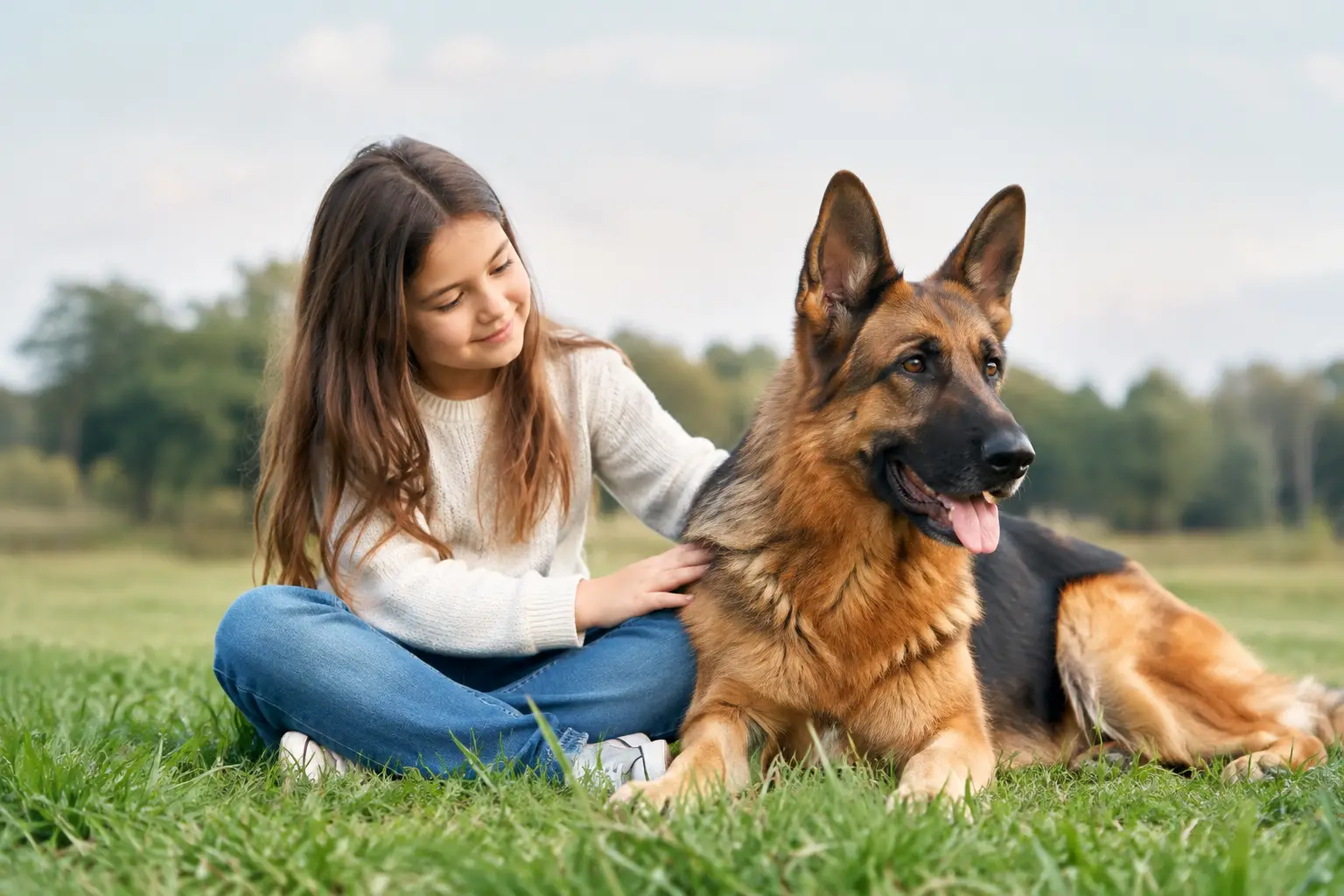
Learn how to prepare children for guardian dogs with clear rules, supervised routines, and professional guidance for a secure, respectful home every day.
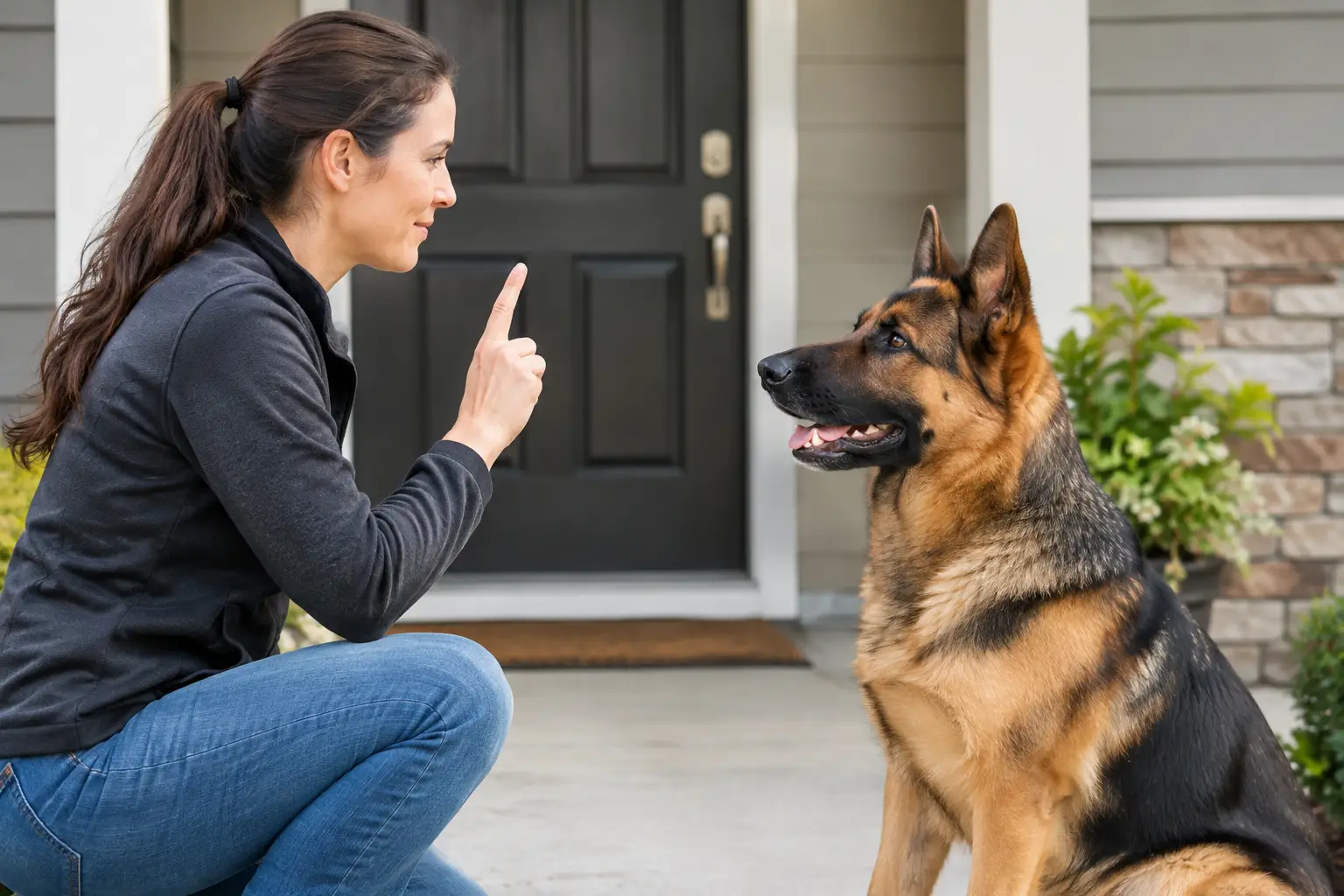
Home security dog commands create control before pressure starts. Learn the obedience, alert, recall, and release standards that protect families safely.
